
- Central
- Edge
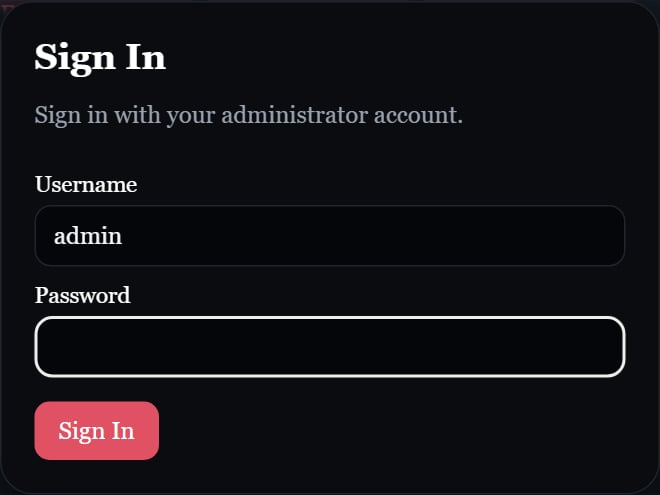
Central's sign-in dialog.
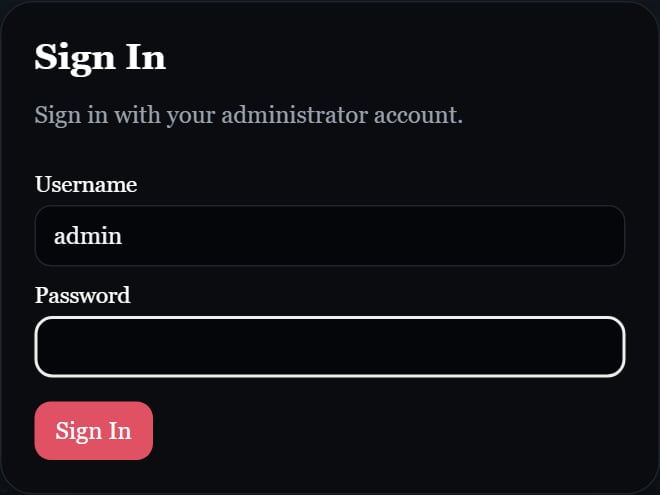
The first admin account
When an app starts with no user accounts, it creates anadmin user. Its password is:
- the value of
INITIAL_ADMIN_PASSWORDin that app’s.env, if set, or admin, if unset, empty, or only whitespace.
INITIAL_ADMIN_PASSWORD. Using admin as any account’s password also requires a password change.
In Central, POSTGRES_PASSWORD is the database password, not your sign-in password.
Accounts are for one operator
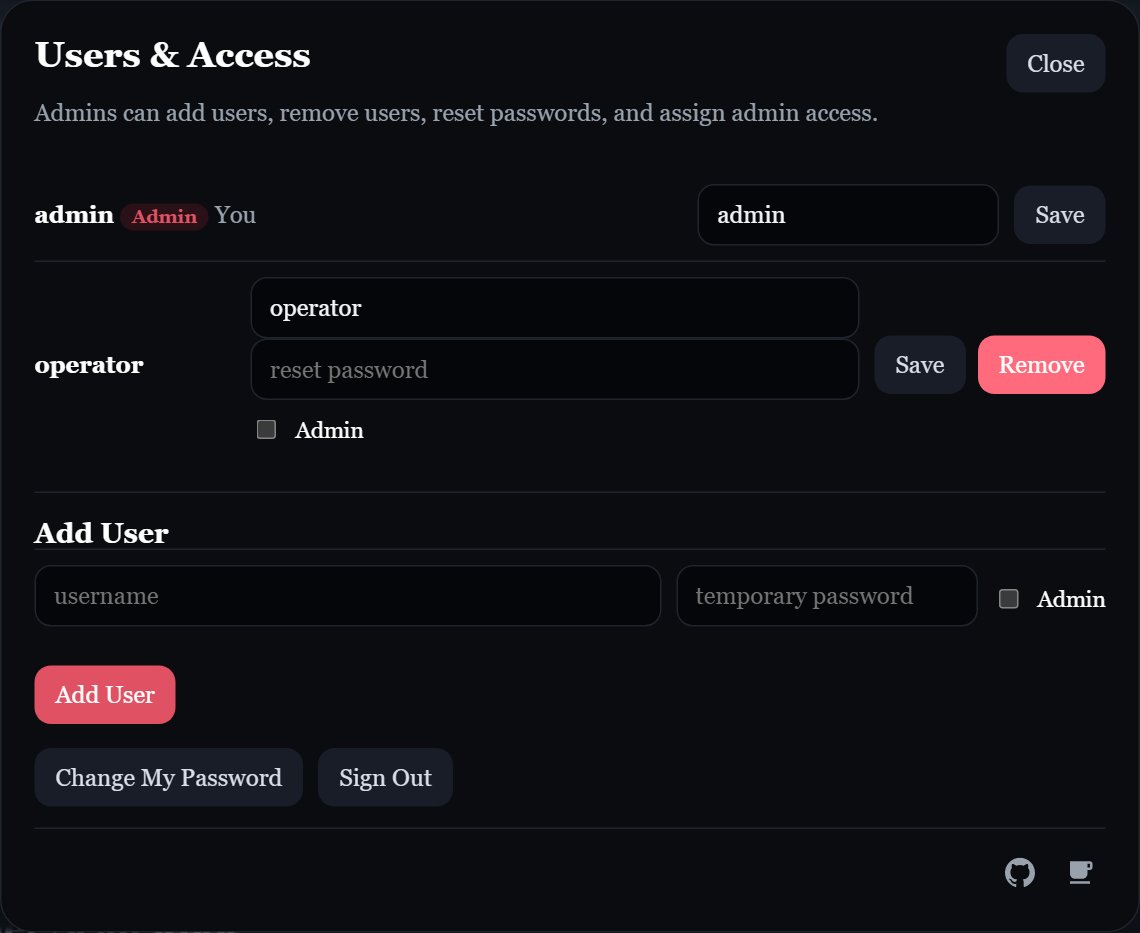
Sign-in exists so one operator can manage the app and keep unauthorized entrants out. Both apps currently include account management and an admin flag, but they aren’t designed for separate tenants or per-user ownership of backups. Click Admin in either app to open Users & Access:- Admins can add accounts, edit usernames, reset another account’s password, assign admin access to other accounts, and remove other accounts.
- Non-admin accounts can view their own account and edit their own username. Non-admin does not mean read-only access to the app.
- The original admin account cannot be removed or lose admin access, and the
adminusername cannot be renamed. You cannot change your own admin access.
- Central
- Edge
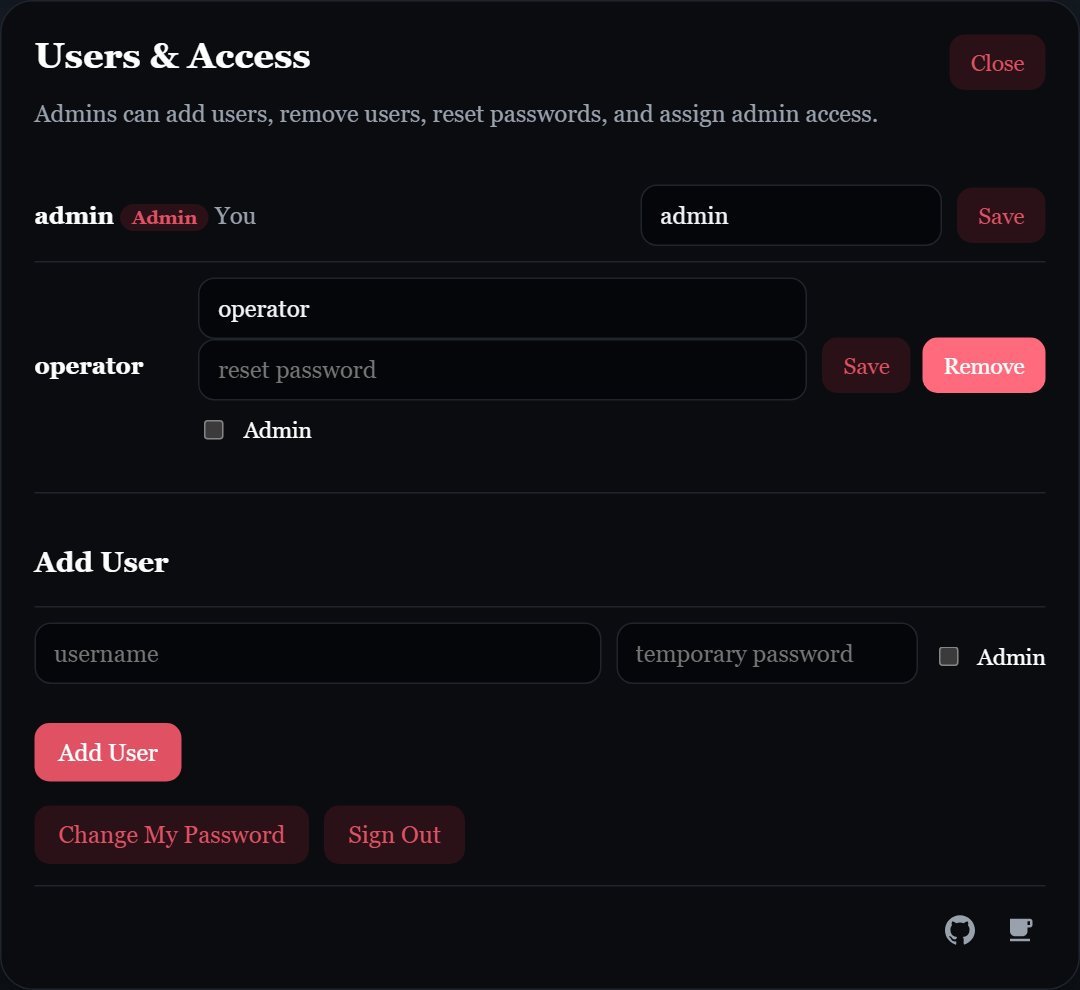
Users & Access in Central, with an example additional account.
Change your password
Open Admin, then Change My Password. Enter your current password and the new password twice. Passwords must be at least five characters and cannot consist only of spaces. The same dialog appears when a password change is required. Changing your own password keeps your existing sessions signed in.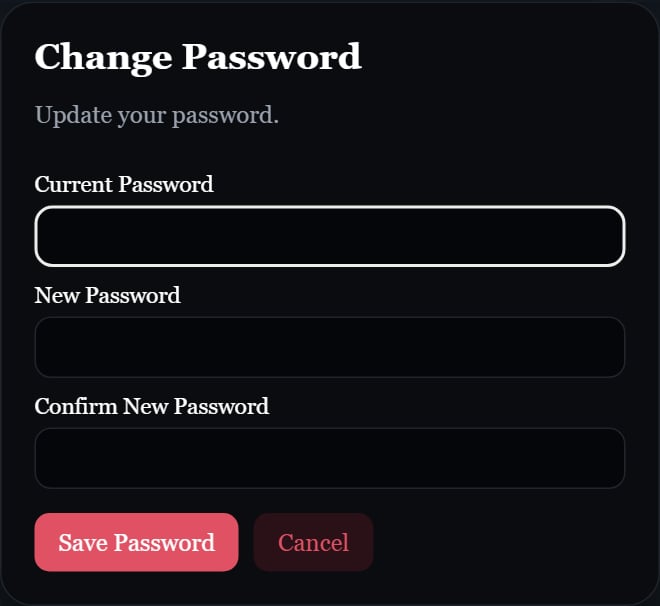
Change My Password in Central; Edge provides the same fields.
Sessions and sign-out
Sessions expire seven days after sign-in. Use Admin → Sign Out to end the current session; this does not sign out other browsers. Central and Edge use separate session cookies, both markedHttpOnly and SameSite=Lax.
Session cookies over HTTPS
If you serve an app over HTTPS (for example behind a reverse proxy), set this in its.env so the session cookie is only sent over secure connections:
.env
1, true, yes, and on. Anything else, or leaving it unset, keeps the cookie usable over plain HTTP.
Edge’s settings dialog warns when its UI is served over plain HTTP. The UI connection and Edge’s connection to Central are separate: use HTTPS for both the Edge UI and
CENTRAL_URL to protect credentials on both connections.